
Recent Posts
The Ultimate Wine Color Chart: What the Color of Wine Really Tells You
If you’re a budding wine enthusiast, you’ve likely heard of the three simple steps for tasting wine: swirl, sniff, and sip. But did you know that you can tell a lot about a wine by first looking at its color? Before the swirl, sniff, and even that first sip of citrus, cherry, or something intriguingly savory—a wine’s color is speaking to you. Quietly. Confidently. It’s your wine’s first impression, and like all good first impressions, it tells you a little about what to expect. That's where a handy wine color chart comes in.
A wine’s color is a clue to its grape variety, style, flavor, and the winemaking techniques used to craft it. This wine color guide breaks down what those beautiful shades and hues in your glass mean. You’ll learn how to assess wine color and interpret your observations. By the end of this guide, wine color will feel less mysterious—and every glass a little more intentional.
Wine Color Chart
Prefer a snapshot view? This wine color chart brings everything together in one easy glance. Use it to quickly match the hue in your glass with its likely flavor profile and style.

What is Wine Color and Why Does it Matter?
Wine color is exactly what it sounds like: the visual hue of the wine in your glass. Red, white, rosé—and all the shades in between. Simple, right? Yes… and no.
Color is one of the first cues wine drinkers notice because our brains are naturally visual. When we see a pale wine, we instinctively associate it with something crisp and refreshing, whereas a darker wine makes us anticipate something bold and luxurious. That instinct isn’t wrong, but it’s also not the whole story.
Wine color offers insight, not guarantees. It can hint at variety, body, age, and style, but it can’t tell you everything about quality or flavor on its own. Consider it a conversation starter, not the final word.
Where Does Wine Get Its Color?
Have you ever wondered why there is such a breathtaking spectrum of wine colors? It is all about the grape skins. The actual juice inside wine grapes is almost entirely clear. A wine’s color comes directly from the skin contact during the fermentation process.
For red wine, winemakers leave the juice in contact with the dark grape skins for an extended time so that the juice can soak up the skins’ red and purple pigments, tannins, and flavors. In contrast, with white wine production, winemakers typically press the grapes off their skins immediately, leaving the juice pale, clear, and free of tannins.
Rosé is crafted by allowing the juice to steep with the red grape skins for just a tiny amount of time—often only a few hours—to achieve that flawless pink blush. Orange wine, which is made from white wine grape varieties, results when those grapes are fermented with their skins. That’s why orange wines are sometimes referred to as skin-contact white wines.
Aging and oxidation also play a role. As wines age, they are exposed to tiny amounts of oxygen over time. This gradual oxidation also changes the color, turning red wines lighter, and white wines darker.
How to Read Wine Color Like a Pro
Ready to learn how to assess wine color like a sommelier? It is wonderfully simple and fascinating. Grab your favorite glass, and let’s explore the visual clues together.
Step-by-Step: How to Observe Wine Color
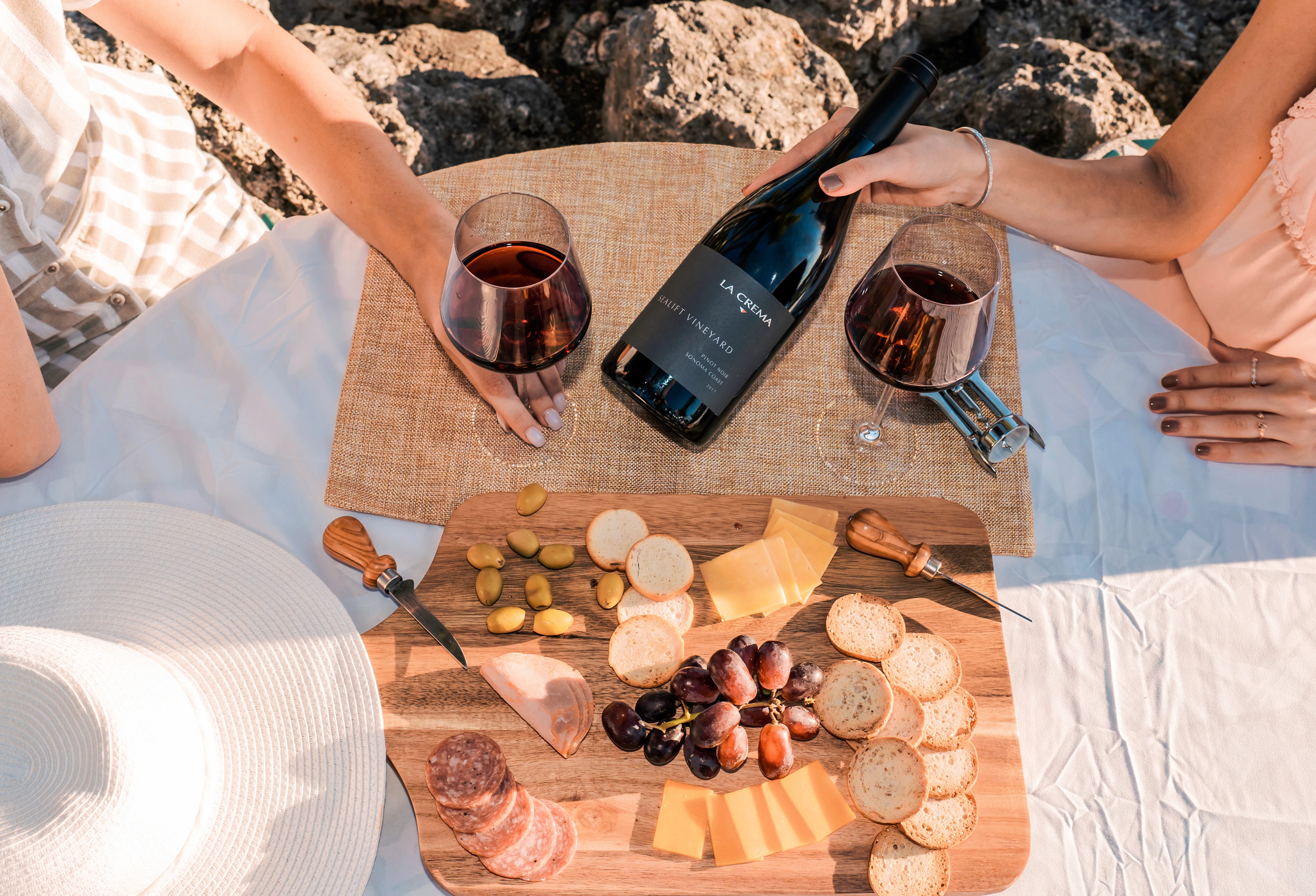
First, find a white background. A white napkin, piece of paper, or tablecloth works perfectly. Tilt your glass slightly against the bright background.
Next, look closely at the core (the deepest part of the liquid in the center of the glass) and compare it to the rim (the thin edge where the wine meets the glass). The core tells you about the wine's intensity, while the rim reveals hidden clues about its age.
Key Terms to Know
While studying the core and rim of the wine against the background, look for these three elements:
- Hue: What is the actual shade of the wine? Is it ruby, garnet, lemon, or amber?
- Intensity: How pale or deep is the color? Does it appear light and watery, or dark and concentrated?
- Opacity: If you place text between the glass and a white background, can you read it through the wine? If you can, the wine has low opacity. If the text is fully blocked, the wine has high opacity.
Red Wine Color Guide
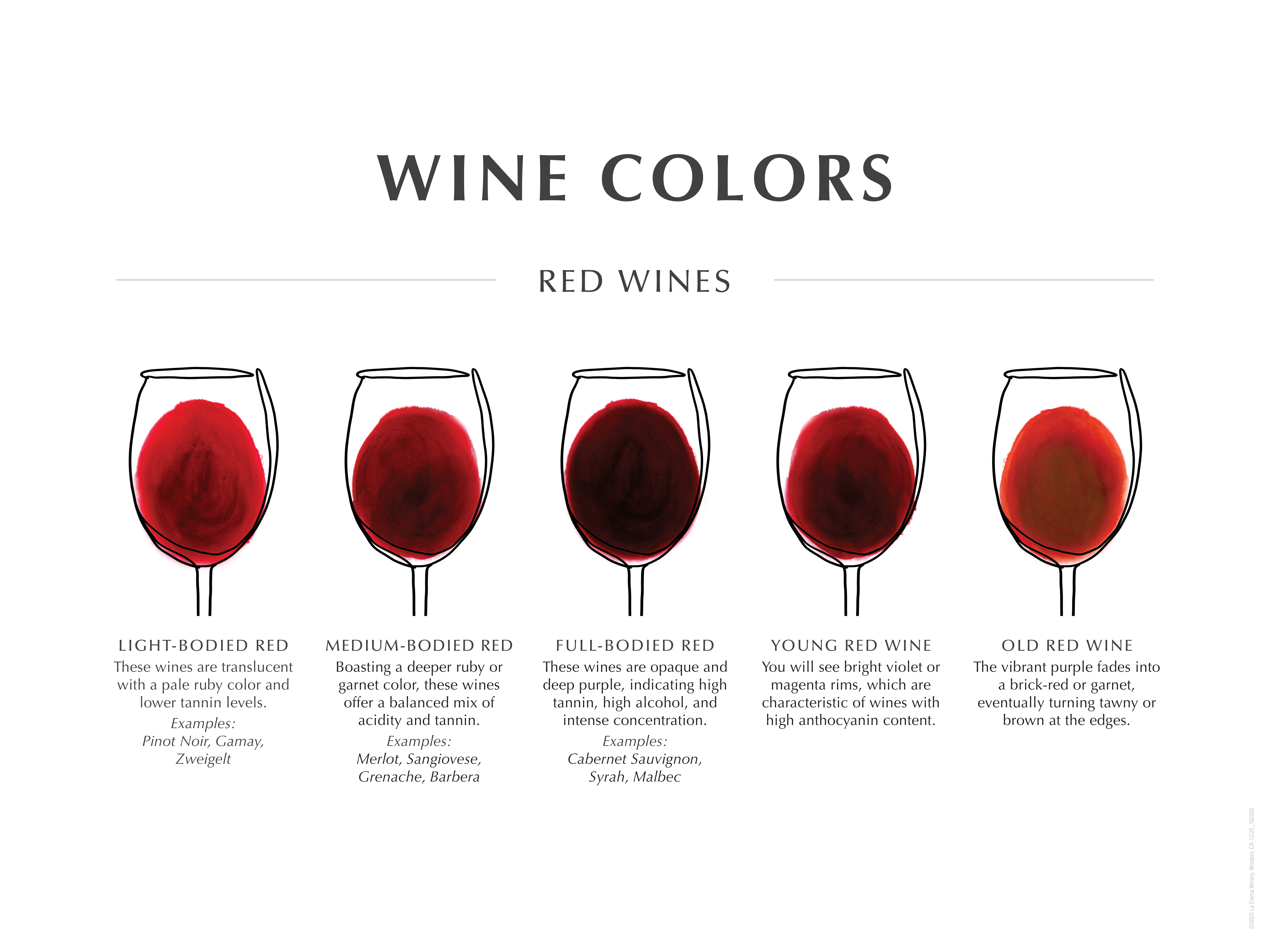
From pale ruby to deep purple, red wine comes in a stunning variety of shades, offering cues about the variety, flavor, style, and age.
Light-Bodied Red
- What it means: These wines tend to be delicate, with lower tannins and higher acidity. They are typically sourced from cooler climates and undergo only a light extraction of color from the skins.
- Color descriptors: Pale ruby, light magenta, or translucent cherry.
- Flavor clues: Red fruits like cherry, cranberry, strawberry, and pomegranate, often with floral notes.
- Example varietals: Pinot Noir, Gamay, Grenache.
Medium-Bodied Red
- What it means: The ultimate crowd-pleasers, these wines strike a balance between structure, depth, tannin, and acidity.
- Color descriptors: Bright ruby to medium garnet. You can usually still see your fingers through the wine, indicating it is not opaque.
- Flavor clues: Ripe red and black fruits, like cherries, plums, and perhaps a touch of baking spice or pepper.
- Example varietals: Merlot, Sangiovese, Zinfandel.
Full-Bodied Red
- What it means: These wines are bold, powerful, and heavily structured with robust tannins, usually built for aging.
- Color descriptors: Deep purple, opaque ruby, inky black, and opaque.
- Flavor clues: Dark fruits, such as blackberries, black currants, and blueberries, layered with rich notes of chocolate, tobacco, or leather.
- Example varietals: Cabernet Sauvignon, Syrah, Malbec.
Young Red Wine
- What it means: Young red wines are those that have been freshly bottled and are bursting with energy. These wines are bright, fruit-forward, and lively.
- Color descriptors: Vibrant purple or bright, brilliant ruby at the rim.
- Flavor clues: Fresh fruit flavors and juicy acidity.
- Example varietals: Beaujolais Nouveau, Zinfandel, young Syrah or young Pinot Noir.
Old Red Wine
- What it means: These wines have matured and their tannins have softened with time, often resulting in great complexity.
- Color descriptors: Garnet, brick red, or even tawny brown near the rim.
- Flavor clues: Dried fruits, earth, leather, mushrooms, forest floor, and beautifully integrated oak.
- Example varietals: Aged Bordeaux blends, vintage Barolo.
.png "White Wine color Chart")
White Wine Color Guide
White wine color is a smart indicator of a wine’s body and the level of oak influence it might have experienced. Let’s dive into the various hues.
Light-Bodied White
- What it means: These wines tend to be crisp, zippy, and refreshing. They are typically fermented in stainless steel to preserve their fresh fruit character.
- Color descriptors: Pale lemon, bright straw, or even hints of green.
- Flavor clues: Bright citrus, green apple, pear, and minerality.
- Example varietals: Pinot Grigio, Chablis (a lean style of Chardonnay), Vinho Verde, Sauvignon Blanc, Albariño, Riesling.
Medium-Bodied White
- What it means: Beautifully textured and versatile, these wines might have seen a tiny bit of oak or lees contact for added richness.
- Color descriptors: Medium lemon, bright yellow, or light gold.
- Flavor clues: Stone fruits, like peach and apricot, alongside melon and white flowers.
- Example varietals: Chenin Blanc, Roussanne, Marsanne, Sémillon, Gewürztraminer, Unoaked Chardonnay.
Full-Bodied White
- What it means: These white wines have a richer mouthfeel, reflecting their having undergone oak aging for added structure and texture.
- Color descriptors: Deep gold, bright yellow-gold, or honeyed amber.
- Flavor clues: Baked apple, peach, pineapple, vanilla, butter, and toasted nuts, with distinct floral notes for Viognier.
- Example varietals: Oaked Chardonnay, Viognier.
Young White Wine
- What it means: These wines were bottled recently to capture ultimate freshness and vitality.
- Color descriptors: Very pale, almost watery at the rim, with vivid green or pale yellow hues. These wines are completely translucent.
- Flavor clues: Zesty, clean flavors like fresh-cut fruit and flowers.
- Example varietals: Young Sauvignon Blanc, young Chardonnay, fresh Riesling.
Old White Wine
- What it means: White wines gain color as they age, becoming richer, more complex, and more deeply colored due to gentle oxidation.
- Color descriptors: Deep gold, amber, or even beautiful caramel hues.
- Flavor clues: Nutty, honeyed, and intensely concentrated dried fruit flavors.
- Example varietals: Aged white Burgundy (Chardonnay), mature Chenin Blanc.
Rosé Wine Color Guide
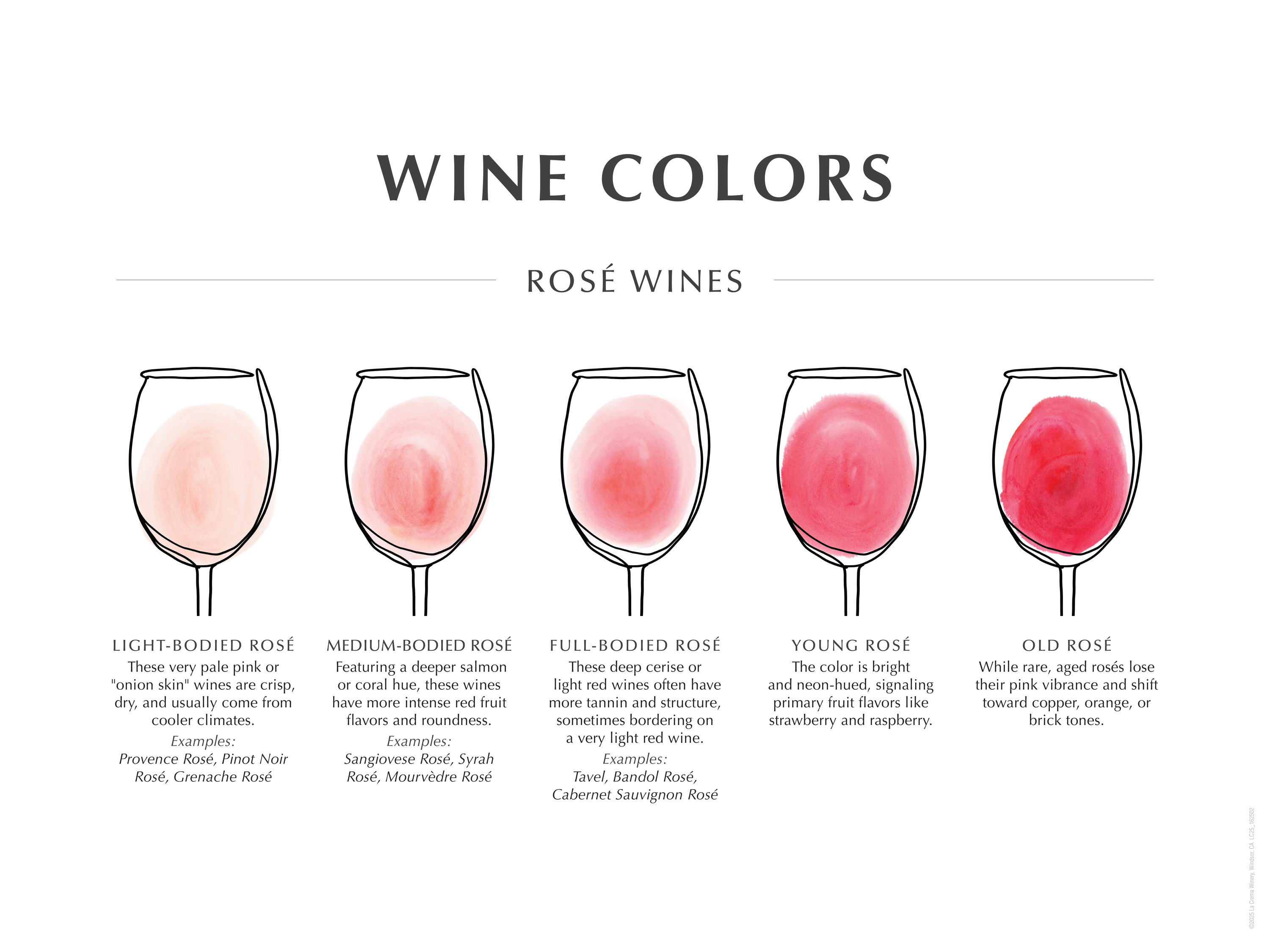
When it comes to wine color, the many shades of rosé are among the most debated and studied—including competition between winemakers in Provence to see who can produce the palest pink! The color of rosé can tell you so much about where it is from and the grapes used to make it.
Light-Bodied Rosé
- What it means: These rosés are bone-dry, elegant, and ultra-refreshing. During fermentation, they usually see the slightest skin contact.
- Color descriptors: Pale peach, onion skin, or barely-there baby pink.
- Flavor clues: White peach, citrus, crushed rocks, and subtle strawberry.
- Example varietals: Provence Rosé (often made from Grenache or Cinsault).
Medium-Bodied Rosé
- What it means: These rosés have a bit more weight, texture, and fruitiness to them, making them spectacular food-pairing wines.
- Color descriptors: Salmon pink to classic bright pink.
- Flavor clues: Ripe watermelon, fresh melon, juicy cherry, and bright raspberry notes.
- Example varietals: Pinot Noir Rosé, Sangiovese Rosé.
Full-Bodied Rosé
- What it means: These rosés are bolder, more structured, and packed with flavor. They often come from thicker-skinned grapes with longer maceration times. Like a full-bodied red wine, many of these rosés are built for aging.
- Color descriptors: Deep pink, ruby-grapefruit, or almost light red.
- Flavor clues: Intense wild berry, cherry jam, tea, and sometimes a hint of spice.
- Example varietals: Tavel Rosé, Bandol Rosé, Syrah Rosé, Cabernet Sauvignon Rosé.
Young Rosé
- What it means: These rosés are crafted to be enjoyed immediately for maximum joy and freshness.
- Color descriptors: Bright, vibrant pink.
- Flavor clues: Snappy, tart, and bursting with fresh summer berries.
- Example varietals: Almost all current-vintage rosés.
What Wine Color Can (and Can’t) Tell You
Wine color is fun to explore—but it can also be misleading. Consider this your friendly myth‑buster moment. First, a darker red wine does not automatically mean it is higher quality, higher in alcohol, or stronger in flavor than a lighter red wine. Some of the most complex, prestigious, and highly alcoholic wines in the world—like Pinot Noir—are remarkably pale.
Second, color alone can’t define a wine’s quality. What it can do is set expectations. To really understand a wine, you have to also consider its aroma, balance (do the fruit, acidity, tannins, and alcohol come together seamlessly or does one of those elements dominate?), origin (is it from a cooler or warmer climate?), and how it behaves on the palate (does it feel sharp, smooth, drying, mouthwatering, or something else?). Think of color as one piece of the puzzle—useful, but not all‑powerful.
Wine Color as a Starting Point, Not a Rulebook
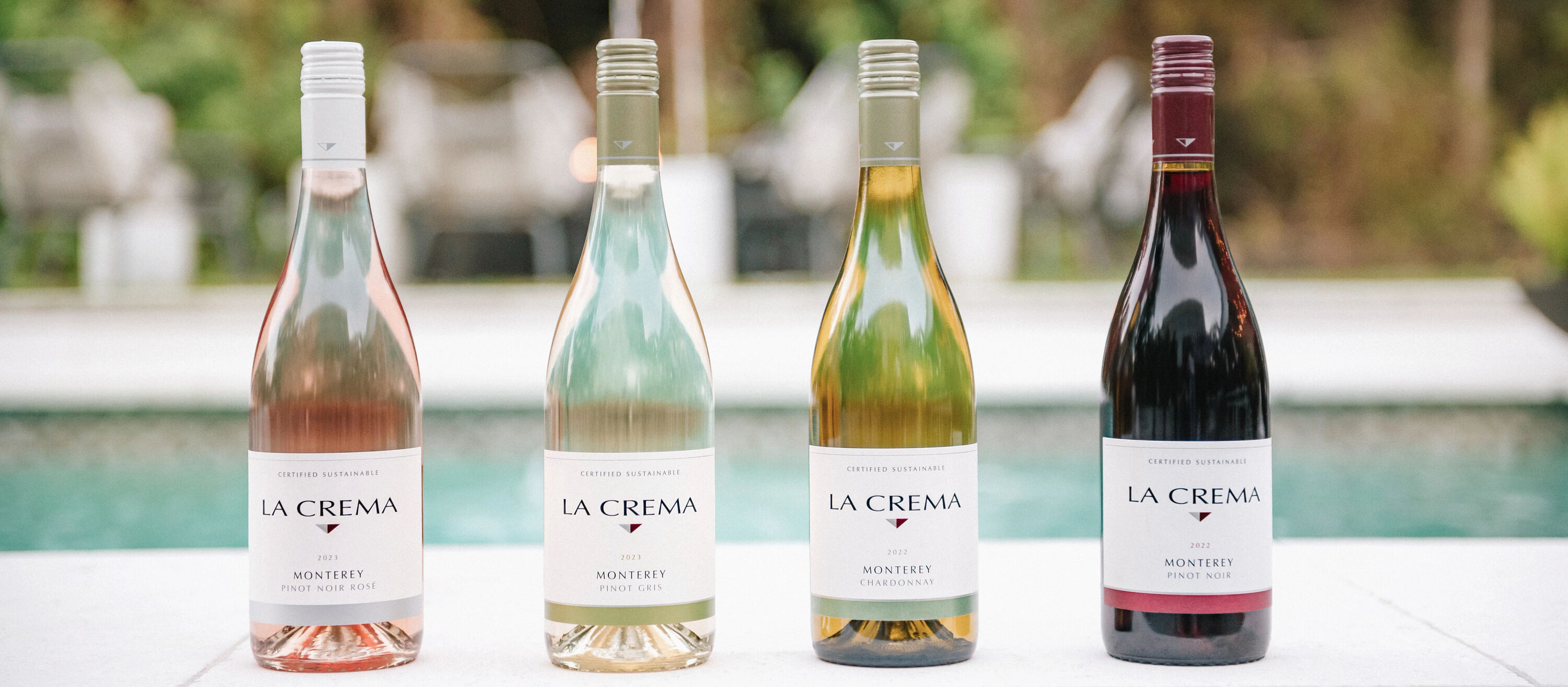
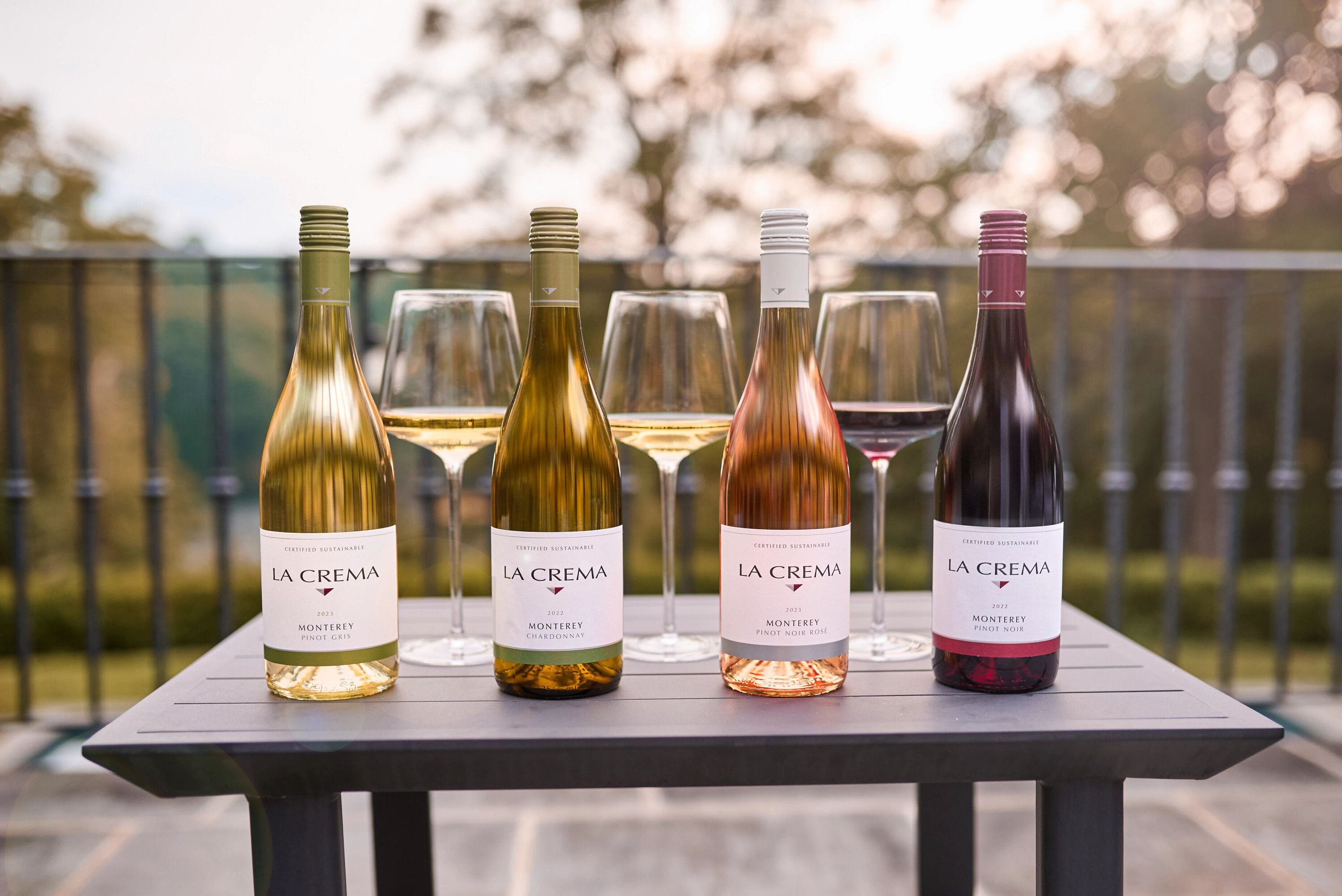
At La Crema, our passion for cool-climate winemaking means we pay close attention to the delicate, expressive colors of our wines. From the elegant, ruby shades of our world-class Pinot Noirs to the dazzling, sun-kissed golds of our beautifully balanced Chardonnays, we celebrate the unique visual story every single bottle tells. From vintage to vintage and variety to variety, this rainbow of colors reminds us that wine is alive, expressive, and wonderfully imperfect.
Let this wine color guide empower you to explore new bottles with confidence. The goal isn’t to memorize rules. It’s to notice, taste, and stay curious. Wine color simply invites you to begin. Go ahead, pour something beautiful, hold it up to the light, and marvel at the magic inside. Cheers to your next discovery!
FAQs
Why do red wines get lighter with age?
As red wine ages in the bottle, the color pigments (aka, anthocyanins) bind with the tannins and fall to the bottom of the bottle as harmless sediment. This reaction causes the once-deep purple or ruby liquid to lighten, soften, and take on a more brick-colored hue over time.
Why do white wines get darker?
It is all about natural oxidation. Even cork-sealed bottles allow microscopic amounts of oxygen to interact with the wine over time. This process slowly deepens the pale yellow hues into golden amber tones—much like a sliced apple turning brown when exposed to air.
Can color tell you sweetness?
Not reliably. A deeply golden white wine might look like sweet honey, but it could be completely bone-dry (like an oaked Chardonnay). Similarly, a pale pink rosé might look dry but could be delightfully sweet. You always have to taste it to know for sure.
What does cloudy wine mean?
Don’t panic, a cloudy wine usually means it was bottled unfined and unfiltered. Many natural and artisanal winemakers choose this method to preserve maximum flavor and texture. It is completely safe to drink and often incredibly delicious.
